
Real Solutions for Back Pain Caused by Herniated Discs
Are you struggling with intense lower back pain? Do you notice that straightening up all the way is painful or impossible? Did this pain start after lifting something heavy or twisting your back? If you nodded ‘yes’ to these questions, you might have a condition known as a herniated disc. Don’t worry; there are proven strategies that can help you feel good again!
Herniated discs are not always painful, but they can be excruciating when they are. Due to the severity of pain associated with a herniated disc, people will try to avoid hurting themselves more and avoid activity. Unfortunately, misguided healthcare practitioners still recommend rest or, worse, bed rest, which is why getting proper treatment is essential!
At IMG Physical Therapy, our team of specialized physical therapists is fully equipped to guide you toward the relief you’ve been seeking, allowing you to get back to the activities you genuinely love without pain!
Understanding the Nitty-Gritty of a Herniated Disc
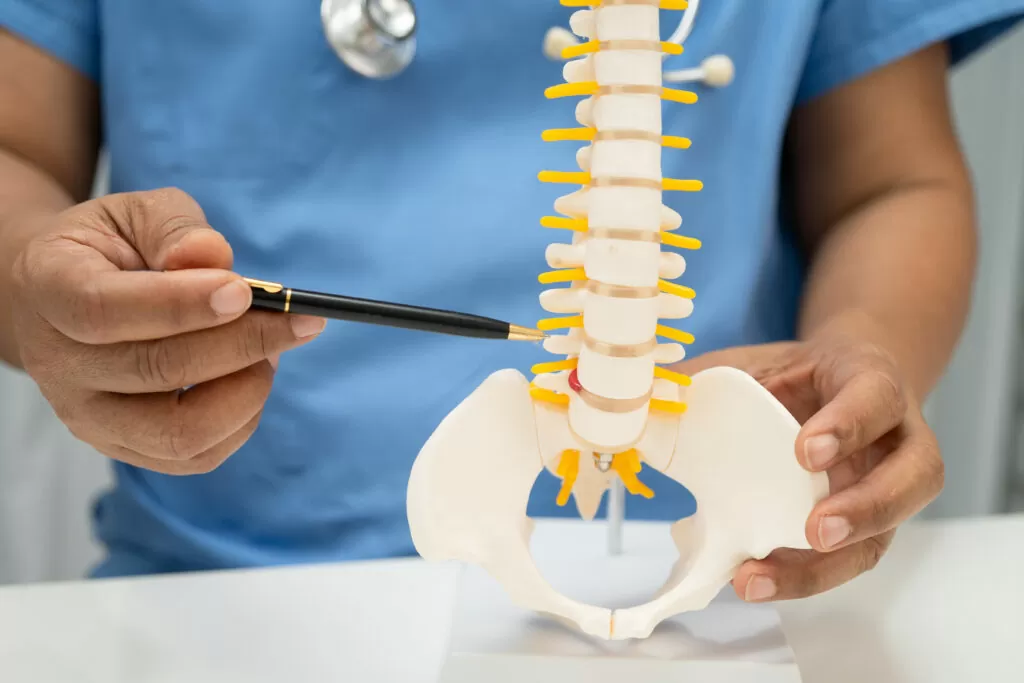
To understand what a herniated disc is, it’s important first to understand the role of spinal discs. Your discs are like shock absorbers in your spine, absorbing compressive forces and permitting smooth, free movements like bending forward, backward, and rotating.
However, as we age, our discs naturally degenerate, begin to dry out, become more stiff, and weaken, becoming more susceptible to herniation. Think of your discs as being like grapes when you’re young and then drying up to be more like raisins as you age.
In addition to age, several variables can elevate your risk of experiencing a herniated disc, including:
- Smoking: Cigarettes are thought to reduce the supply of oxygen to the disc, causing it to break down more quickly than it normally would.
- Occupation: Those engaged in jobs requiring repetitive motions like lifting, bending, and twisting are also more susceptible.
- Sedentary Lifestyle: Long durations of sitting, especially in incorrect postures, contribute to increased risk.
- Genetics: Family history may play a role in increasing the risk of developing a herniated disc.
A herniated disc occurs when the soft, gel-like substance in the middle of the disc breaks through the inner aspect of the disc and protrudes out, usually in the back wall of the disc. This bulging out can pinch the nearby spinal nerves, leading to inflammation and excruciating pain that might even radiate down your leg or arm.
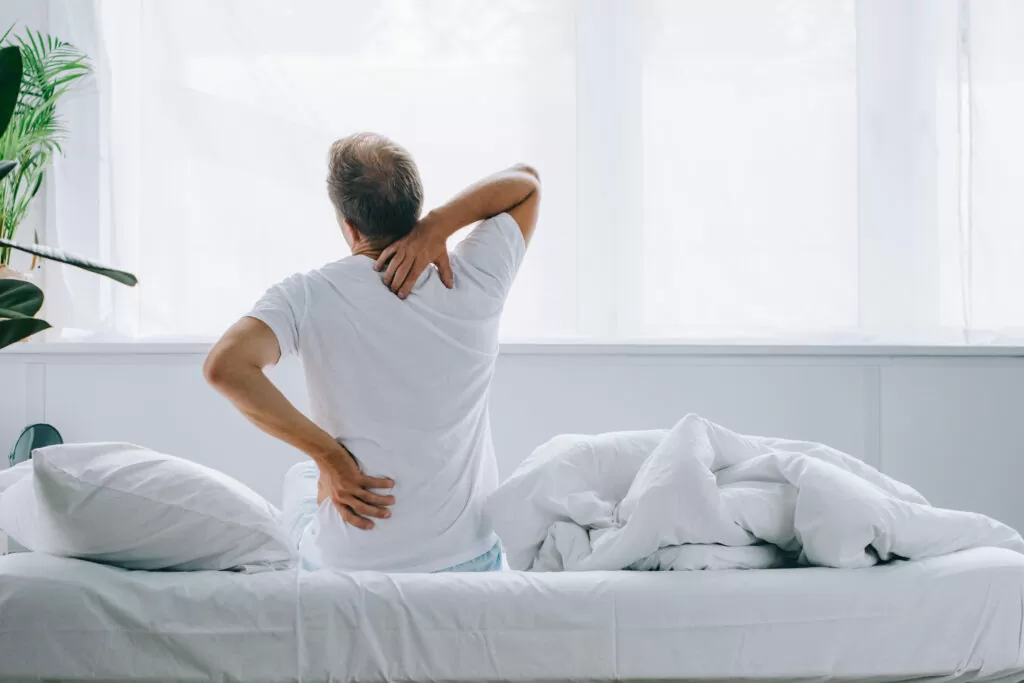
Even when the disc doesn’t affect the nerves, it is infamous for causing sharp and intense pain in the lower back, affecting your ability to move, especially standing upright, and interfering with your overall quality of life. For some, the pain is so unbearable that it hampers even the simplest daily tasks, like sitting, moving, or lying down to sleep.
The silver lining? Our skilled physical therapists can teach you how to manage your debilitating pain and provide the tools to return to a pain-free life!
Hello to all of our loyal readers! I hope this newsletter finds you all doing well and enjoying the warmer weather! This is an exciting time for our Country. 250 years!!!! I am excited to see some of the celebrations and the historical shows.
It’s been wonderful having this warmer weather! It means many of you are getting outside and becoming active. But, what happens if you start having low back pain and notice symptoms that may be going down your leg, including numbness, tingling, or even weakness? Maybe like our country, you are feeling 250 years old right now.
This brings me to the dreaded “slipped disc”, or more appropriately named, disc herniations, which we treat at IMGPT. We see this condition most commonly in individuals who are between the ages of 30 and 50 years old; and men are more likely to get this than women.
Discs are located between the vertebrae in the spine and separate the bones to allow the nerves to leave the spine and travel down to their eventual destination in the legs. Discs are made of 80% water, like a jelly donut. Unfortunately, sometimes certain activities such as repetitive lifting, twisting, weight-bearing sports, or even poor posture can “push the jelly out of the donut”. If this material gets pushed out enough, it can cause the nerves to get pinched resulting in feelings of tightness, numbness, tingling, pain, and weakness in the back and the legs. These symptoms can start suddenly or come on gradually.
There are some cases in which the herniation warrants immediate referral to the doctor, but that is rare. The great news is that your PT is able to screen for this at your initial encounter, and if you are found to be appropriate for PT, we can get you back to doing what you love by utilizing our manual techniques and exercises!
If these symptoms sound like something you or a loved one are dealing with, please do not wait to call us! This beautiful weather is way too short-lived, so let us help you get back to doing what you love ASAP! We are happy to do a consultation at no cost, or a full evaluation that will be submitted to your insurance. Give us a call at (610)-944-8140 to start your IMG-PT journey! Enjoy the fireworks and take it all in. These moments are rare. This is a celebration that we should all be proud about.
Effective Solutions for Herniated Disc
At your first visit, one of our experienced physical therapists will perform a comprehensive assessment, including a medical history and physical examination. Afterward, your physical therapist will design a personalized treatment plan specifically for your unique situation that may include the following:
- Manual Therapy: Our physical therapists use passive movement techniques, called mobilizations, to improve the range of motion in the spine, reducing stiffness and pain.
- Stretching and Mobility Exercises: Targeted stretches to improve spine mobility and muscle flexibility are often the starting point. As you move better, you’ll feel better!
- Core Strengthening: Exercises like planks and bridges can help stabilize the spine and help in improving proper techniques when performing movements like squatting or lifting activities.
- Neural Mobilization: Our therapists may use neural mobilization or “nerve gliding” exercises to relieve nerve tension, which can reduce the radiating pain commonly associated with herniated discs.
Understanding the condition and its management is crucial. Our experts often educate the patient about body mechanics, lifestyle changes, and long-term exercise strategies to prevent future episodes. We know that your first step to recovery starts with understanding.
Why Wait?
Call IMG Physical Therapy today for a comprehensive evaluation and learn the steps you can actively take to recover from a herniated disc and guard against future occurrences. Book your life-changing appointment today!
Call today to schedule an appointment with one of our specialists!

Unconventional Yet Highly Effective Tips to Help Your Back Pain
Back pain is one of the most common ailments affecting adults worldwide. While there are various conventional treatments and strategies for dealing with back pain, prevention remains the best approach. Here are a few uncommon yet highly effective tips for preventing back pain that you can try at home.
Diaphragmatic Breathing
Diaphragmatic breathing is not just for Yoga enthusiasts. This breathing technique engages your diaphragm, reduces your heart rate, and helps in relaxation. Surprisingly, it also helps in stabilizing your core. A strong core can better support your back, preventing back pain.
How to do it:
- Lie on your back with your knees bent. Place one hand on your chest and another on your abdomen.
- Inhale deeply through your nose, allowing only your abdomen to rise.
- Exhale through your mouth, engaging your core muscles.
- Practice this for 5-10 minutes daily.
Dynamic Sitting
Sitting for prolonged periods is a leading cause of back pain. Dynamic sitting encourages movement even while seated, making your core muscles work in maintaining posture.
How to do it:
- Choose a chair that allows freedom of movement. Swivel chairs are a good choice.
- Shift your weight periodically and tilt your pelvis by moving your belly button forward, and then tilt your pelvis back, allowing your lower back to “slouch” slightly backward.
- Engage your core muscles intermittently while sitting using the same diaphragmatic breathing mentioned above.
Visualization Techniques
Believe it or not, the mind plays a significant role in perceiving pain. Visualization techniques can not only help in relaxing tense muscles but can also mentally train you to handle pain better.
How to do it:
- Close your eyes and imagine a serene environment.
- Visualize the tension in your back being replaced by relaxed, calm muscles.
- Pair this visualization with deep breathing for better results.
By incorporating these unconventional strategies into your daily routine, you can help prevent the onset of back pain. Always consult our IMG Physical Therapy providers before starting any new exercise to ensure it’s appropriate for you.
July 2026 Events

Exercise of the Month
Straight Leg Raise SLR
(Hip Flexors, Quads)
Lie on your back on a mat with both knees comfortably bent. Straighten the knee you wish to exercise. While keeping your knee straight, lift your leg up to the height of your opposite knee (45 degrees from the ground). Hold for 2 seconds. Slowly lower your leg back down. 2 Sets, 10 Reps.
Lemon Delight

Ingredients:
- 20 Lemon Oreos
- 4 Tbsp. unsalted butter, melted
- 1/4 tsp. kosher salt
- 8 oz. cream cheese, room temperature
- 1/4 cup plus 2 Tbsp. confectioners’ sugar, divided
- 1 1/4 cups plus 1 Tbsp. heavy cream, divided
- 1 large lemon
- 1 package lemon Jell-O
- 3/4 cup boiling water
- 2 ice cubes
- 2 to 4 drops yellow food coloring (optional)
Instructions:
- In a food processor, pulse Oreos until fine crumbs form. Add butter and salt and pulse just until combined. Pour into an 8″ x 8″ glass baking dish. Using the back of a measuring cup, press to an even layer. Refrigerate until ready to use.
- In a medium bowl, using a handheld mixer on medium-high speed, beat cream cheese, 1/4 cup confectioners’ sugar, 1 Tbsp. cream, and zest of 1/2 lemon until light and fluffy. Using an offset spatula, spread cream cheese mixture evenly over crust. Refrigerate until ready to use.
- In a medium heatproof bowl, dissolve Jell-O in 3/4 cup boiling water. Place 2 ice cubes in a measuring cup, then pour in cold water to make 3/4 cup total. Add ice water (ice included!), 3 Tbsp. lemon juice, and 1/4 cup cream. Stir in food coloring (if using) and stir, adding more food coloring until desired shade is reached, until slightly thickened, 1 to 2 minutes. Gently pour Jell-O mixture over cream cheese layer. Refrigerate until set, 2 to 4 hours.
- In a medium bowl, using handheld mixer on medium-high speed, beat remaining 1 cup cream and 2 Tbsp. confectioners’ sugar until stiff peaks form.
- Spread over top of set Jell-O layer. Sprinkle zest of remaining 1/2 lemon over.
Patient Spotlight
“As always, my experience at IMG-PT has been amazing! Living with chronic back pain is challenging, but the staff at IMG-PT have always been helpful at getting the pain to manageable levels. The experience gives you the warm feeling of exercising with friends, combined with the expert knowledge of professionals who are truly masters of their craft. There were many days at the beginning where I could not stand up straight and walking and driving were slow and painful. With IMG-PTs help, I can stand tall and move comfortably at normal speeds. Always a 10/10 and would (and do!) recommend IMG-PT to anyone with pain issues/ in need of PT!” Jared H.
Call Us Today
No matter your specific needs, IMG PT is here to help you manage your symptoms. From personalized guidance to targeted exercise programs, we’ll find solutions that work for you.
Call us to schedule your initial consultation.