

Running Injuries: Common Training Errors To Avoid
Are you looking for the most effective ways to avoid running injuries? Or have you been dealing with a nagging injury or persistent pain and looking to resolve your issues and get back to pain-free running? At IMG PT, our physical therapists can guide you back to health and make sure you can run at your peak potential!
If you’re a runner, you understand the importance of training. Unfortunately, it seems like there is conflicting information, no matter where you look. It seems like one group of experts recommends one type of training when another expert claims that it is actually causing your problems and that you should be doing an entirely different type of training.
With all the changing information about how to prevent injuries, it can help to know there is someone you can count on for answers based in fact, not on a fad. At IMG PT, we want to ensure that you avoid running-related pain and injury, so you get out there and enjoy your runs!
Request an appointment with one of our running specialists today, so we can help you train for a marathon or jog through the neighborhood without worrying about an injury getting in your way!
What Are The Leading Training Errors That Cause Running?
Running is one of the most popular activities worldwide. Unfortunately, running is often associated with pain or injury related to training. As technology improves, more and more people search the internet for help with training and recovering from an injury.
Unfortunately, the more desperate you are, the more likely you will look to any solution, regardless of its effectiveness. This, in turn, leaves people susceptible to the troubling amount of misinformation that permeates the running community. For example, too many runners emphasize ineffective solutions like changing their running shoes instead of implementing strategies that have been proven to make a significant difference, like training properly.
Identifying the exact cause of most running-related injuries is often impossible. More often than not, it is a combination of multiple factors or something that seems unrelated to the current issue.
For example, most people don’t know that the leading risk factor associated with runners sustaining an injury is having a previous injury in the last 12 months. The type of injury does not seem as important as the fact you had an injury and did not resolve it entirely. Resolving a prior injury will reduce your risk of getting hurt and keep you running.
Although there seems to be a difference in novice vs. experienced runners, as well as age and gender differences, the risk factors that lead to running injuries are mostly training errors. According to research studies, the most common risk factors include the following:
- Running experience of 0–2 years
- Restarting running after extended rest
- Overtraining (i.e., more than 40 miles per week, men > women)
- Women recreational runners were associated with a greater risk of running-related injury.
At IMG PT, our physical therapist will help you resolve any pre-existing issues and maximize your training while simultaneously preventing injuries in the future!

IMG PT Finish Line: Your Guide to Healthy Running
A long time ago in a galaxy far far away…. Or it was Harrisburg, I ran my first and only marathon. It was a great experience and I learned a lot about running and training for such a difficult distance. I would love to say that the race went smoothly, but that would not be true. I started out with a great plan, but as Mike Tyson would say, ”Everyone has a plan until they get punched in the face.” Well, I started out great and ran a very good first half marathon pace, but somewhere around mile 20 I got punched in the face, and as runners will describe it, hit the proverbial wall. I ended up finishing the second half of the marathon an hour slower than the first half. I did finish, but learned that I definitely went out too fast and did not leave enough in the tank for the second half. Still a great experience and I learned a lot.
Running is one of the most accessible and effective ways to boost your health. Whether you are training for a local 5k or just enjoy a brisk morning jog through the neighborhood, those miles add up to a stronger heart, a clearer mind, and a more resilient body.
At IMG Physical Therapy, we want to make sure you stay on the road (or trail) and out of the clinic. This month, we’re breaking down why you should lace up your sneakers and how to keep your stride injury-free. The benefits of a consistent running routine extend far beyond just “cardio.” It is a full-body investment: The benefits include cardiovascular improvement, increased bone density, improved mental clarity, and increased metabolism which helps manage weight.
While running is great for you, the repetitive nature of the sport can lead to “overuse” injuries if you push too hard, too fast. Here are the most common culprits we see: Runner’s knee which is pain around the knee cap known as patellofemoral pain syndrome. Another common issue is plantar fasciitis which is pain around the bottom of your heel and can hurt a lot when you take that first step in the morning. Other issues runners struggle with are shin splints, pain in the front of your shin. Achilles tendonitis which is pain in the back of your heel where the Achilles tendon goes into the calcaneus (heel bone).
3 Tips for a Safer Stride
- Warm Up Properly: Skip the “reach and hold” stretches before your run. Instead, do dynamic movements like leg swings, lunges, and high knees to wake up your muscles.
- Listen to Your Body: There is a difference between “working hard” discomfort and “something is wrong” pain. If a pain causes you to change your running form, it’s time to stop and rest and possibly seek help from IMG Physical Therapy if the pain persists.
- Check Your Gear: Your feet are your foundation. If you haven’t been fitted for a shoe that matches your arch type and gait, it might be worth a trip to a specialized running store. Fleet Feet is a great resource to get fitted for the proper shoe size and inserts if needed.
Ready to get back on track? If you’re dealing with a nagging ache or want a professional gait analysis to improve your form, give us a call! At IMG Physical Therapy, we specialize in helping athletes of all levels move better and recover faster.
Stay healthy, stay active, and we’ll see you out there!

How Your Physical Therapist Can Help You Prevent Running Injuries
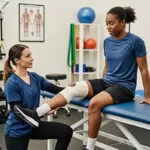
At IMG PT, our physical therapists have proven successful in treating runners. We can help runners in all aspects of rehabilitation, injury prevention, return to run programs, and improved performance through proper training.
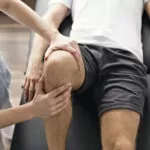
To start with, your physical therapist will thoroughly analyze your joints, muscles, and gait to identify any limitation or weakness that may lead to a running-related injury. Our therapists will take a thorough history to understand your training schedule, the type of training you perform, your history of previous or current injuries, and the runner’s overall health status.
This information is the foundation for our individualized programs. Initially, the emphasis is on alleviating pain and restoring mobility. We will employ targeted manual therapy techniques and modalities to ensure your progress and provide home exercises designed to maintain and improve your results.
We tailor our therapy interventions to your individual needs and an active approach to rehabilitation. As you progress, we will give you strengthening exercises that help to restore your function, prevent future injuries and enhance your overall performance when training or racing.
We will include balance and coordination drills, as well as any exercises that can stimulate your nervous system and minimize your risk of future injuries. Our “return to running” programs will focus on progressing your exercises to facilitate improvements where you have limitations or weaknesses to ensure a safe return to running.
Identifying all the possible causes of injury requires the skills of our trained physical therapists. We will assess you as a whole person and use the information to develop a program tailored to your specific needs to ensure you get back to pain-free running!
Request An Appointment At IMG PT Today!
At IMG PT, our physical therapists are up-to-date on the most common risk factors for running-related injuries. Our goal is to ensure you have the tools to train properly to help reduce your risk of future injuries and run at your peak potential!
Call today to schedule an appointment with one of our specialists!
Sources:
https://www.ncbi.nlm.nih.gov/pmc/articles/PMC8329321/, https://www.researchgate.net/publication/260528060_The_Effects_of_Running_Cadence_Manipulation_on_Plantar_Loading_in_Healthy_Runners, https://journals.sagepub.com/doi/abs/10.1177/0363546518773755, https://www.sciencedirect.com/science/article/abs/pii/S0966636218316758, https://www.sciencedirect.com/science/article/abs/pii/S1440244018301798, https://journals.sagepub.com/doi/full/10.1177/0363546518793657

June
Schools out have a safe summer

June 14
Flag Day

June 21
Father’s Day
Exercise of the Month
Bridging
(Glutes, Lower Back, Hamstrings)
Begin on your back. Bend your knees and keep your back flat on the ground. Gently, contract your abdominals and hold to keep your back flat as you move up into the bridge position. Remember to breathe. Gently, squeeze your butt muscles and lift your hips off the ground. The goal is to have your hips aligned with your knees and shoulders. Hold for 5 seconds. 3 Sets, 10 Reps.
No Bake Strawberry Shortcake
A tender vanilla cake filled with layers of whipped cream frosting and juicy strawberries. The classic flavors of strawberry shortcake in a layer cake.

Ingredients:
- 1 box vanilla instant pudding
- 1/2 cup strawberry juice
- 1 1/2 cups nonfat milk
- 1 teaspoon vanilla extract
- 24 Savoiardi Lady Fingers
- 1 pound fresh strawberries, hulled, sliced and patted dry
- 220 g whipped cream, chilled
Instructions:
- In a bowl, whisk pudding, milk, and vanilla and set aside.
- With a hand mixer or in the bowl of a stand mixer, whip the cream until it just holds stiff peaks. (Add sugar if desired).
- Dip ladyfingers briefly in strawberry juice and arrange them in the bottom of a dish.
- Spread half the pudding mixture over the ladyfingers.
- Place the strawberries in a single layer over the pudding.
- Repeat with remaining ladyfingers, pudding mixture, and strawberries.
- Top with whipped cream and strawberries.
- Chill for at least 4 hours before serving.
Patient Spotlight
“I came into IMG Physical Therapy with chronic pain after ACL/meniscus surgery which made it difficult to run at a high level. Not only did you guys focus on weakness, but targeted some imbalances that I wouldn’t even have thought could be the cause of my pain. I am currently beginning my journey back running and now I have more confidence that I can be able to compete at an elite level again.“
—J.D.
Call Us Today
No matter your specific needs, IMG PT is here to help you manage your symptoms. From personalized guidance to targeted exercise programs, we’ll find solutions that work for you.
Call us to schedule your initial consultation.